Love Gnosall | A-Z of Help & Advice
Food Caddies



For many households across Gnosall, the new food recycling caddies have raised plenty of questions. What can go in them? Will they smell? Is it really worth using them?
Let's find out more. The new weekly collection is not simply another bin to remember. It is designed to reduce waste, save money and turn household leftovers into renewable energy.
Here are some of the most useful facts you may not know.
Across Staffordshire, around 48% of the average household's general rubbish bin is made up of food waste that could be recycled instead.
Rather than sending it to landfill or incineration, food waste can now be collected separately and put to productive use.
The rule is surprisingly simple.
If it's food, raw or cooked, it can go in your food waste caddy. Packaging (except the food liner) and non-food items should go in the correct recycling or waste bin instead.
You can recycle almost all food, whether it is raw or cooked, including:
If you can eat it, or once could have eaten it, it will usually belong in the food caddy.
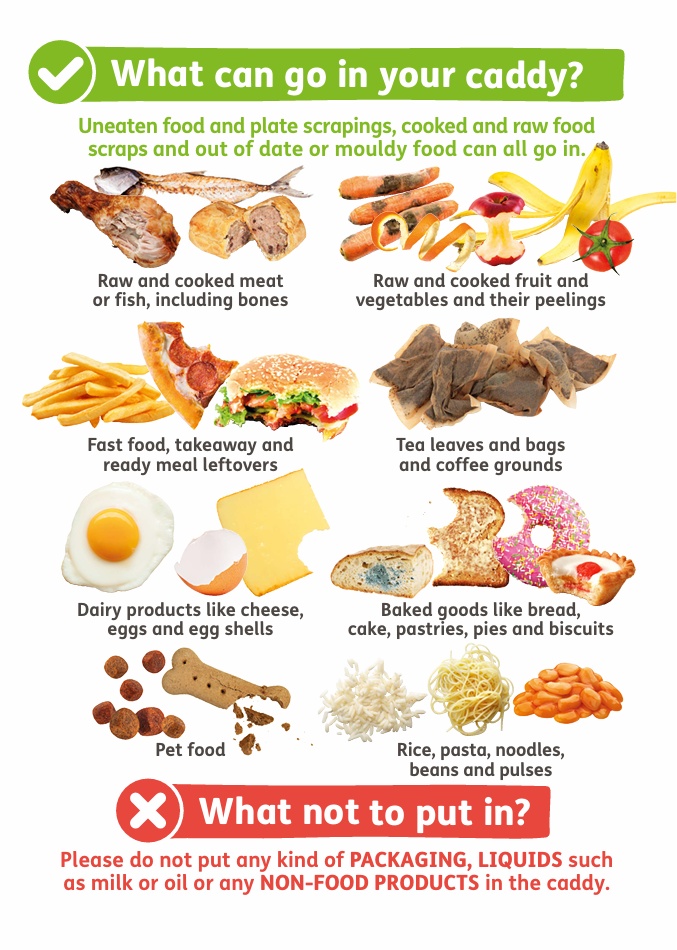
A few items should never be placed in the food caddy, including:
Putting the wrong items in your caddy could mean it is not emptied until the contamination has been removed.
Once collected, your food waste is not mixed back into general rubbish.
Instead, it is taken to a specialist anaerobic digestion facility, where natural bacteria break it down inside oxygen-free tanks.
The process creates:
It is a clever example of the circular economy, with yesterday's leftovers helping to grow tomorrow's crops.
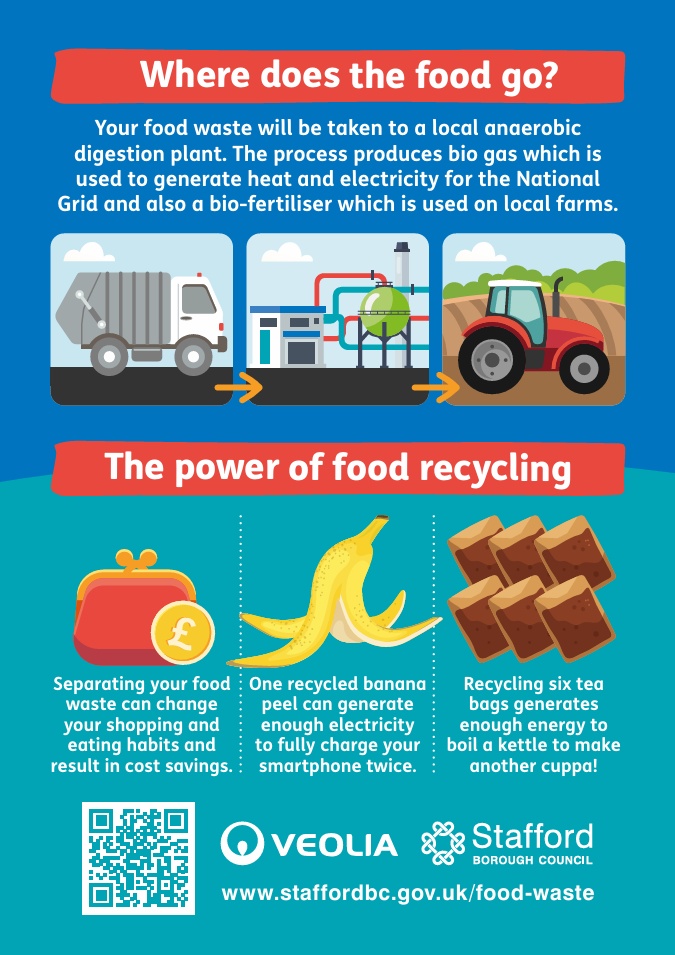
According to Staffordshire County Council, a single banana skin can generate enough renewable energy to charge a smartphone twice.
Imagine the amount of energy that could be produced if an entire village recycled its food waste every week.
Odour is one of the most common concerns residents have about food caddies.
In practice, food caddies can be more hygienic than keeping food scraps in your general rubbish because they are emptied every week.
To keep your caddy clean and fresh:
Weekly collections help prevent smells from building up.
Yes.
Home composting is excellent for fruit and vegetable waste, but several types of food should not normally be placed on a household compost heap, including:
The food caddy accepts all of these, so it complements home composting rather than replacing it.
Your normal collection day will remain the same, and there are currently no plans to reduce the frequency of general waste collections or change the size of household bins.
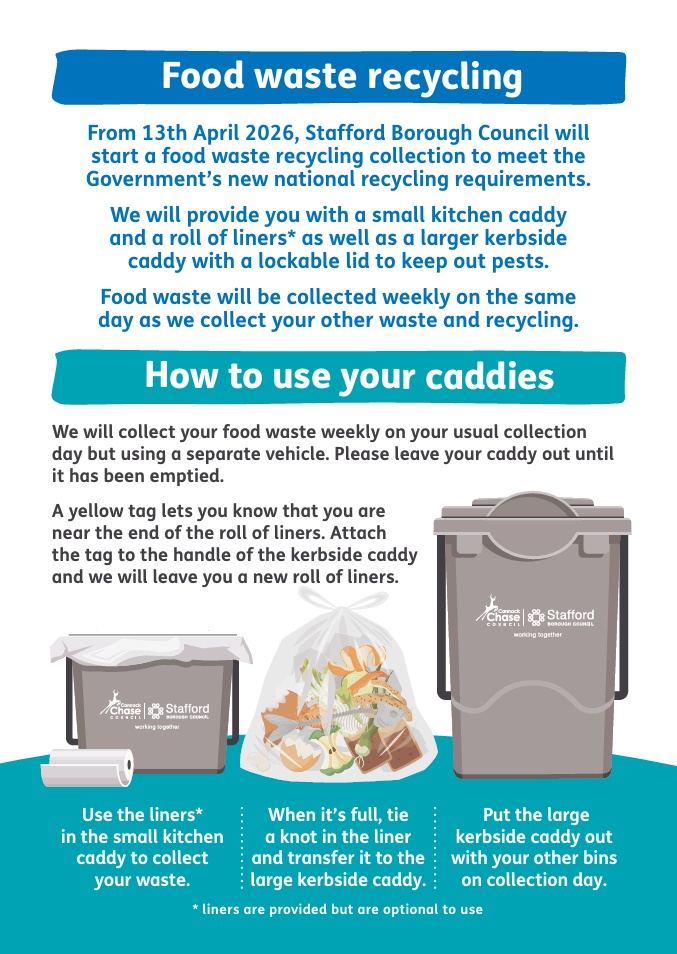
The food caddy is collected every week alongside your existing waste collections.
Each household receives a supply of liners with its caddy pack.
When you need more, a yellow tag lets you know you're near the end of the roll. Just attach the yellow tag to the handle of the kerbside caddy and a new roll will be left with you.
You don't need to use the liners that are supplied to you - you can use your own as long as they are clear plastic to allow the crew to check that the food inside can be recycled. Solid colour bags of waste may not be collected if the crew cannot see inside. Clear zip-lock bags are ideal.
Separating food waste may feel like a small change, but when thousands of households do it every week, the collective impact becomes significant.
Less food ends up in general waste, more renewable energy is produced, and valuable nutrients are returned to the soil instead of being lost.
It is one of those simple habits that can quietly make a meaningful difference.
If you have not started using your caddy yet, try keeping the small kitchen caddy close to where you prepare meals.
After a few days, separating peelings, tea bags and leftovers should become second nature. You may also notice that your general rubbish bin stays considerably emptier.
Stafford Borough Council have produced this useful video on Youtube to help you get started with the new food caddies.
Did you know... you can recycle mouldy food?
Don't scrape the mould off or throw it in the black bin. Mouldy bread, fruit and leftovers can all go straight into your food caddy (just remove any packaging first).
Did you know... meat and bones are welcome?
Unlike many home compost bins, your food caddy accepts cooked meat, fish, poultry, bones and dairy products.
Did you know... tea bags and coffee grounds count as food waste?
Used tea bags, coffee grounds and paper coffee filters can all be recycled in your food caddy.
Did you know... you don't need to fill it?
Even if your caddy is only partly full, put it out every week. Regular collections help prevent smells and keep it hygienic.
Did you know... you don't have to wash food packaging?
Simply scrape the food into the caddy and recycle the clean packaging separately where possible. There's no need to rinse every yoghurt pot perfectly.
Did you know... frozen food can go straight in?
Out-of-date frozen food can be tipped into the caddy once you've removed the packaging. There's no need to wait for it to thaw.
Did you know... the liner is optional?
You can use the caddy without a liner if you prefer. Many people simply rinse the caddy out occasionally.
Did you know... every household makes food waste?
Even careful cooks produce peelings, eggshells, teabags and coffee grounds. The caddy isn't just for leftovers.
Did you know... your black bin may smell less?
Moving food waste into a weekly collection often means your general rubbish contains far less material that can rot and create unpleasant odours.
Did you know... you're helping reduce greenhouse gases?
Recycling food waste means it can be turned into renewable energy rather than decomposing as general waste, helping reduce its environmental impact.
You don’t need an account — all feedback is anonymous unless you add your name or email.